 Հայերեն
 Русский
 English
Why cats drink so little and how to help them get more water
A cat may rarely visit the water bowl and still get enough fluid. Learn how diet affects hydration, how to make water more appealing, and when a change in thirst is concerning.
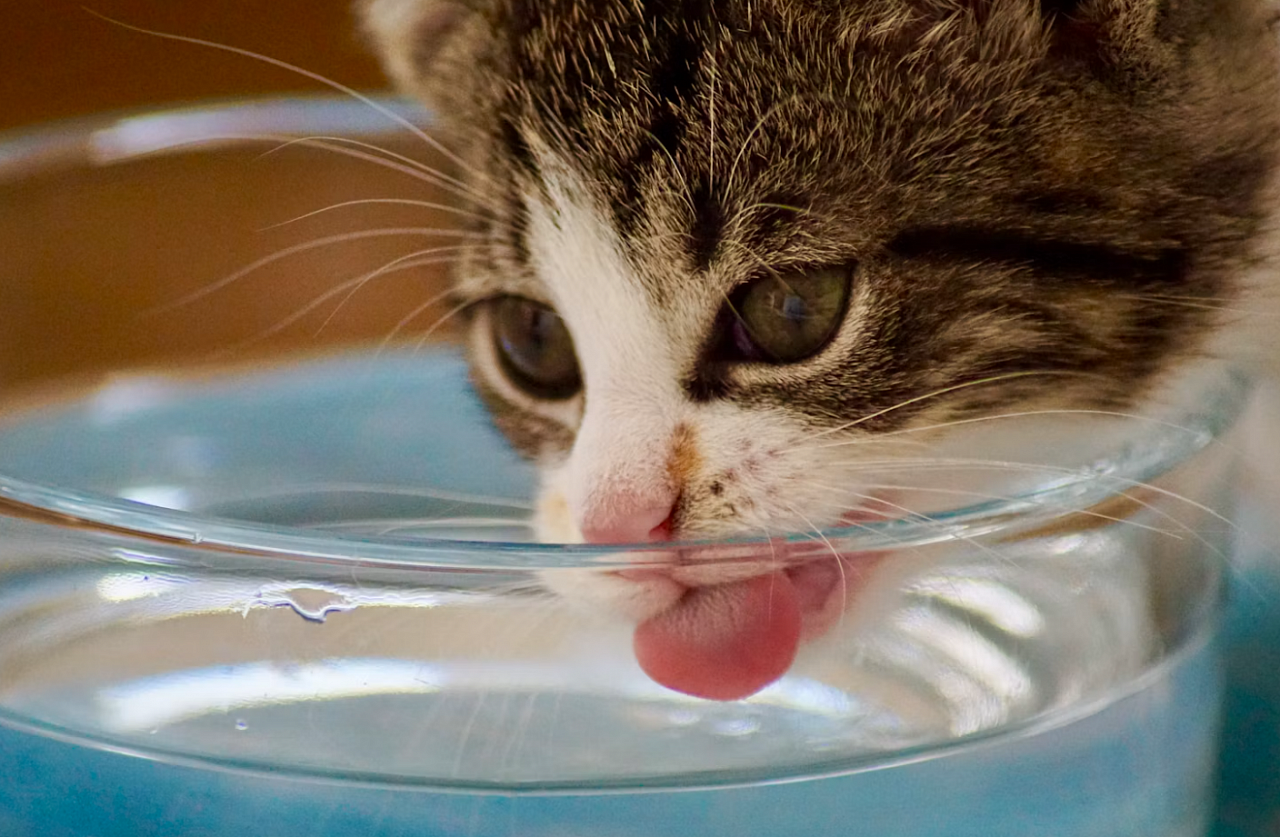
Many owners notice that their cat visits the water bowl only a few times a day and begin to worry that this must be too little. Cats do have an important peculiarity: they can obtain a substantial proportion of their daily water from food, especially when eating a wet diet.
For that reason, hydration cannot be judged only by how much disappears from the bowl. What matters is total water intake from food plus drinking water.
Why do cats often drink less than dogs?
The ancestors of domestic cats adapted to relatively dry environments and obtained much of their water from prey. Modern cats still retain physiological traits associated with that history.
A cat eating wet food may therefore drink very little from a bowl and still receive plenty of water. A cat eating mainly dry food generally has to compensate by drinking more.
How much water does a cat need?
Exact requirements depend on body weight, environmental temperature, activity, diet, age and health.
Veterinary references commonly give a broad total-water range of roughly 60–100 ml per kilogram of body weight per day for healthy cats, but this includes the water contained in food. A cat on a wet diet may drink very little separately, while a cat on dry food may need to drink considerably more.
There is no benefit in forcing a healthy cat to reach a particular number from a chart. It is more useful to understand the pet's usual pattern and consider what it eats.
Wet and dry diets contain very different amounts of water
Wet foods contain a high proportion of moisture, whereas dry kibble contains much less. Two cats of the same size can therefore use their water bowls very differently while both remain normally hydrated.
If a veterinarian wants a particular cat to increase water intake, switching partly or fully to an appropriate wet diet may be one useful strategy.
Sometimes the bowl is the problem
A cat may be thirsty but dislike the drinking setup.
Possible reasons include:
- a narrow bowl that repeatedly touches the whiskers;
- a dirty container;
- the smell of plastic or detergent;
- water that has been sitting for a long time;
- a noisy or busy location;
- a bowl placed beside the litter tray;
- competition from other animals.
Cats are individual. One may happily use a small bowl while another strongly prefers a wide ceramic dish.
Offer more than one water source
One of the simplest ways to encourage drinking is to place several water bowls in different parts of the home.
This allows the cat to choose where it feels most comfortable. It can be especially useful in larger homes and multi-pet households.
The water does not have to sit directly beside the food. Some cats appear to prefer drinking at a separate location.
Which type of bowl is best?
Wide, shallow bowls made from ceramic, glass or stainless steel often work well. They are relatively easy to clean, and the wide shape may reduce contact with the whiskers.
There is no universal winner, however. The best bowl is the one the individual cat is actually willing to use.
Does a cat need a drinking fountain?
Some cats are strongly attracted to moving water, and a fountain can increase their interest in drinking. Others ignore fountains or dislike the sound of the pump.
A fountain is therefore optional, not essential. If a cat happily drinks from bowls, there is no need to replace them just because fountains are popular.
If you do use one, dismantle and clean it regularly and replace filters as recommended. Continuously moving water is not automatically clean water.
How often should water be changed?
Fresh water should be offered every day, and visibly contaminated water should be replaced sooner. Bowls should also be washed regularly because biofilm can build up on their surfaces.
During hot weather, or if fur and food debris frequently enter the bowl, changing the water more often is sensible.
Can you add water to food?
If the cat accepts the texture, a little extra water can be mixed into wet food. Some cats will also eat moistened dry food, while others strongly dislike any change in consistency.
Changes should be introduced gradually. If adding water causes the cat to eat significantly less, do not continue the experiment simply for the sake of additional fluid.
What about broth or milk?
Ordinary cow's milk is not a good hydration strategy for adult cats. Many do not tolerate lactose well, and milk also adds unnecessary calories.
A small amount of water from tuna packed in plain water or an unsalted meat broth is sometimes used to make water more appealing, but it must not contain onion, garlic, excessive salt, spices or other unsuitable ingredients.
Flavoured water should be an occasional tool, not a substitute for constant access to clean fresh water.
Hydration matters even more in hot weather
During warm weather, make sure several sources of fresh water remain available. Avoid leaving bowls in direct sun where the water quickly becomes warm.
In a multi-storey home, placing water on more than one level can also make access easier.
How can you recognise possible dehydration?
Home tests for dehydration are not always reliable, particularly in thin or older cats. Concerning signs include:
- marked lethargy;
- dry or tacky gums;
- poor appetite;
- vomiting or diarrhoea;
- noticeably reduced urination;
- weakness;
- prolonged refusal of both food and water.
If a cat looks unwell or significantly dehydrated, home hydration tricks are not enough — veterinary assessment is needed.
What if a cat suddenly starts drinking much more?
A sudden increase in thirst is important too. Owners may be pleased that a cat is “finally drinking well”, even though unusually frequent visits to the water bowl can be a sign of disease.
Increased thirst and urination can occur with kidney disease, diabetes and several other conditions. Veterinary advice is particularly important if the change persists or is accompanied by weight, appetite or activity changes.
Know what is normal for your own cat
The best way to recognise a problem is to understand the animal's usual habits. A cat that has always visited the bowl rarely, eats wet food, feels well and urinates normally is very different from a dry-fed cat that suddenly stops drinking.
The opposite is also true: a marked increase in drinking without a diet or weather change deserves attention.
A simple home plan
- keep fresh water available at all times;
- offer several bowls in quiet locations;
- wash bowls regularly;
- try wide ceramic, glass or stainless-steel containers;
- offer a fountain if the cat seems to enjoy moving water;
- remember to count moisture from wet food;
- seek veterinary advice if thirst changes suddenly.
The key point
Cats often drink less from a bowl than owners expect, especially when they eat wet food. That does not automatically mean they are under-hydrated.
The most useful approach is to make clean water easy and attractive to access, consider moisture from food, and watch for changes in the cat's normal habits. A sudden decrease or increase in thirst is more meaningful than any single universal number.