Հայերեն
 Русский
 English
Why dogs and cats should not regularly eat each other’s food
A few stolen kibbles are usually harmless, but dog and cat foods are not interchangeable. Here is why the two species have different nutritional needs.
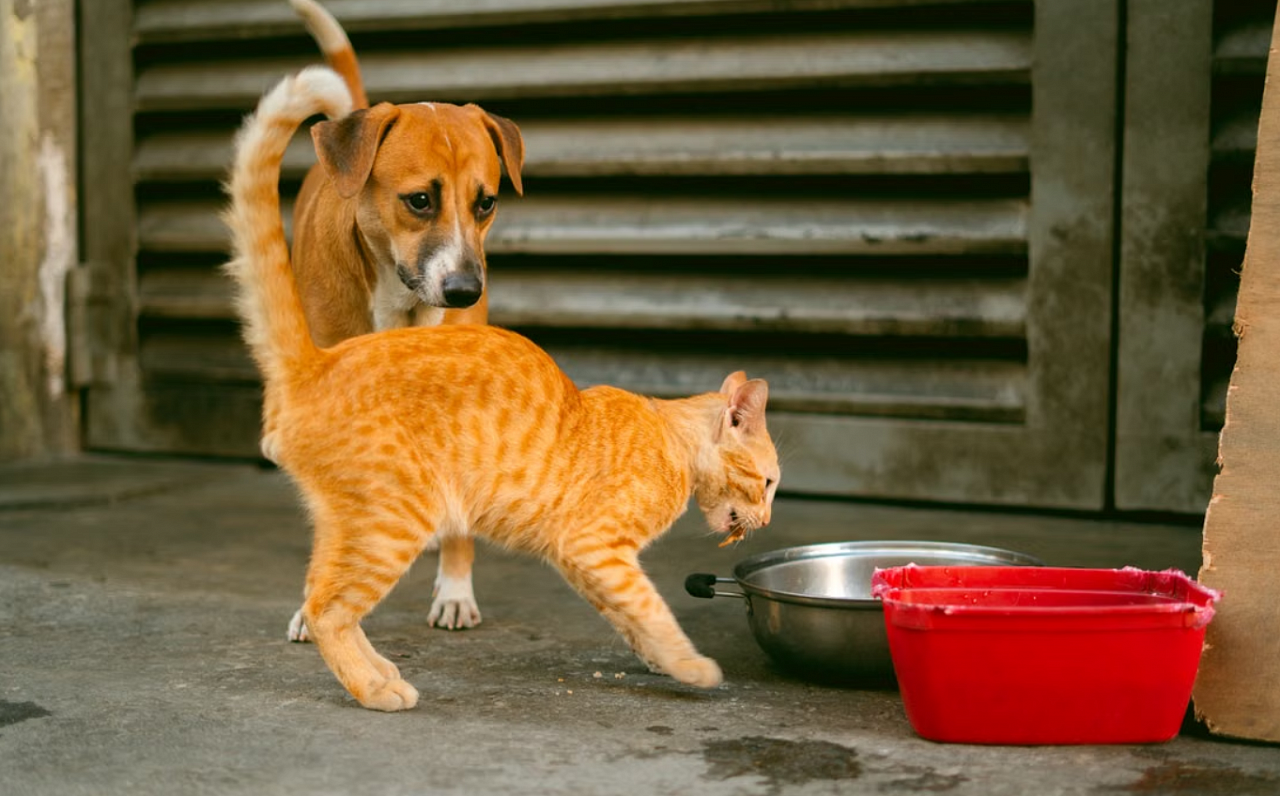
If a dog and a cat share a home, the situation is familiar: the dog tries to inspect the cat's bowl, while the cat occasionally samples the dog's food. A healthy pet stealing a few pieces once in a while is usually not an emergency, but dog and cat foods should not be used interchangeably as regular diets.
The reason is simple: dogs and cats have different nutritional requirements. Even a high-quality complete food is formulated for a particular species, life stage and physiological condition.
Why cats should not live on dog food
Cats are obligate carnivores. This does not mean that they must eat nothing but pieces of meat; it means that feline metabolism has evolved with specific dietary requirements that must be supplied in an appropriate form.
Important feline requirements include:
- taurine, an amino acid essential for functions including the heart, vision and reproduction;
- arachidonic acid, an essential fatty acid for cats;
- preformed vitamin A, because cats cannot rely on beta-carotene conversion in the same way dogs can;
- adequate levels of protein and specific amino acids;
- an appropriate balance of minerals and other nutrients.
Dog foods are designed to meet canine requirements and are not required to provide all of these feline nutrients at the concentrations a cat needs. A few stolen kibbles are therefore very different from relying on dog food every day.
What can happen if a cat is fed the wrong diet long-term?
Nutritional deficiencies do not necessarily become obvious overnight. That is one reason an unsuitable diet can appear to be “working” for quite some time.
Long-term deficiencies can affect the skin and coat, muscle condition, vision, heart function and general metabolism. How quickly problems develop depends on the actual food and the individual animal.
Kittens, pregnant or nursing cats and cats with chronic disease are particularly poor candidates for nutritional experimentation.
Can dogs eat cat food?
The reverse situation is different. For most healthy dogs, a small amount of cat food is not toxic. The concern is that feline diets are often more energy-dense and may contain more fat and protein than an individual dog needs.
Regularly eating cat food can contribute to:
- excess calorie intake and weight gain;
- digestive upset;
- a diet that is not balanced for canine requirements;
- problems in dogs that medically require fat restriction or another therapeutic diet.
In sensitive or predisposed dogs, very fatty food may also contribute to pancreatic problems. If a dog eats a large amount of cat food and then develops repeated vomiting, abdominal discomfort, marked lethargy or loss of appetite, veterinary advice is appropriate.
Why do many dogs love cat food?
Cat food can be extremely appealing to dogs. Its energy density and strong aroma may make it more attractive than their normal meal.
But “my dog loves it” and “this is appropriate nutrition” are not the same thing. Dogs enthusiastically eat many foods that should never become the basis of their diet.
Can cat food be used as a dog treat?
A few pieces occasionally are unlikely to matter for a healthy dog if the main diet remains a complete canine food. There is, however, little reason to turn cat food into a routine daily treat.
Treats and extras should be considered as part of total calorie intake. They should never displace the complete diet or become a substantial portion of daily energy intake.
What if a cat eats some dog food?
If a healthy cat accidentally eats a small amount from the dog's bowl, there is usually no reason to panic. Dog food is not a poison for cats.
The problem begins when it becomes a large or regular part of the diet. Over time, the cat may fail to receive nutrients that must be present in a nutritionally complete feline diet.
Life stage matters too
The species name on the package is not the only important factor. Nutritional needs change throughout life.
Puppies need a growth diet, healthy adult dogs need an appropriate maintenance diet, and some senior or medically affected dogs may require special nutrition. The same principle applies to kittens, adult cats and older cats.
For that reason, an adult-cat food should not automatically become the main diet for a growing kitten simply because both foods are labelled for cats.
How to feed a dog and cat in the same household
The easiest solution is to separate feeding physically.
- feed pets in different rooms;
- remove bowls after meals if you use scheduled feeding;
- place the cat's food where the dog cannot reach it;
- use a baby gate or separate room for slow eaters;
- make sure one pet is not consuming both portions.
This also makes it much easier to know how much each animal is actually eating.
The ingredient list is not the whole story
Owners often judge pet food mainly by the first few ingredients listed on the package. But an ingredient list alone does not show whether the finished diet is nutritionally balanced or appropriate for a particular animal.
More important considerations include whether the food is complete for the relevant species and life stage and whether the manufacturer has reliable nutritional formulation and quality-control processes.
When diet should be discussed with a veterinarian
Ask your veterinary team about nutrition if a pet:
- is overweight or underweight;
- has chronic kidney, liver, heart or gastrointestinal disease;
- may have a food allergy or intolerance;
- has repeated vomiting or diarrhoea;
- has a significant appetite change;
- has been prescribed a veterinary therapeutic diet.
In these situations, even small amounts repeatedly stolen from another pet's bowl can interfere with a carefully designed treatment plan.
The key point
Dog food and cat food are not interchangeable. An accidental snack is usually not a reason for alarm, but dogs should not live on cat food and cats should not live on dog food.
Each species has distinct physiological requirements, so the best everyday diet is one that is complete and balanced specifically for that animal, its life stage and its health status.