Հայերեն
 Русский
 English
How much sleep does a dog really need, and when is sleepiness concerning?
Adult dogs may sleep for much of the day and puppies even longer. Here is what normal sleep can look like and why changes from your dog’s usual routine matter most.
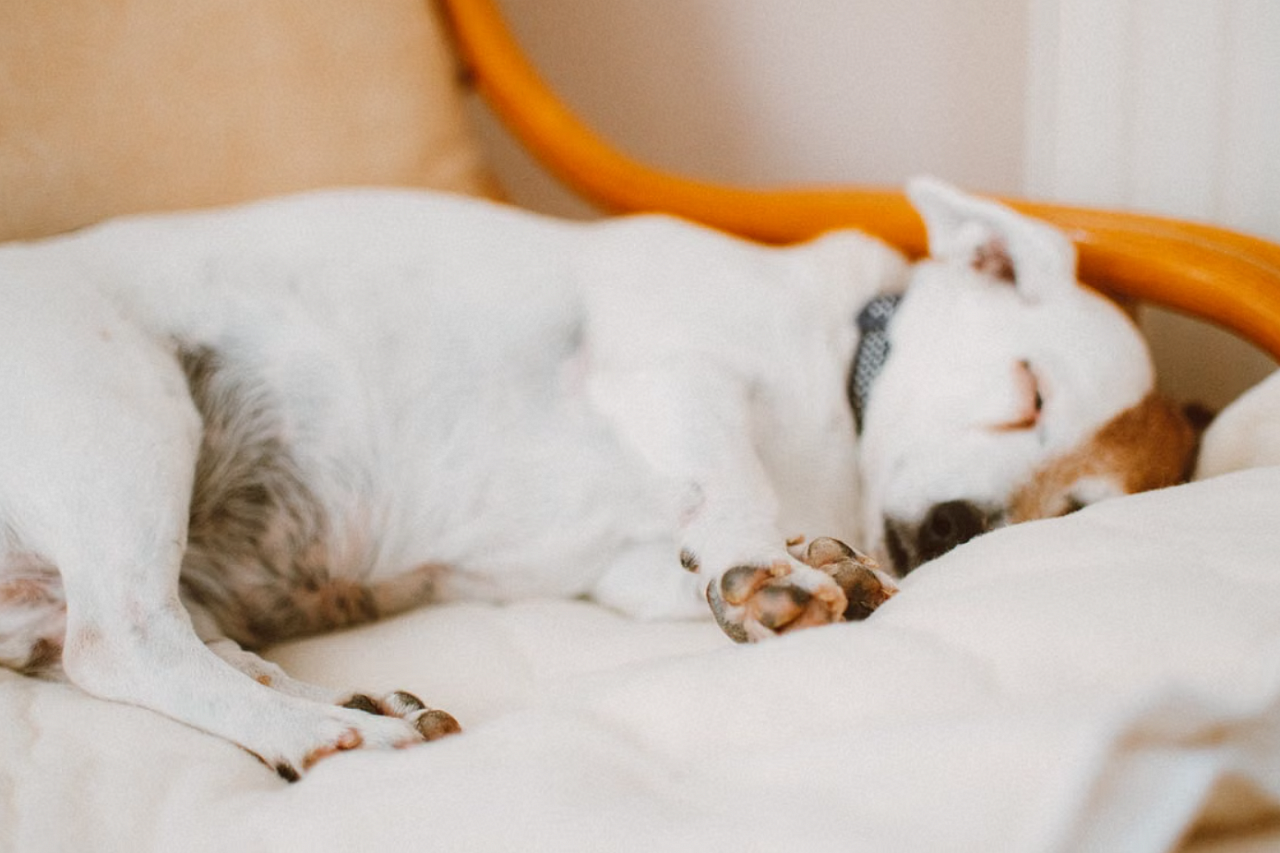
It can sometimes seem as if a dog is capable of sleeping for half the day, going for a walk and then immediately returning to bed. To a person this may look excessive, but canine sleep is organised differently: dogs commonly rest in several periods throughout the day and generally need more total downtime than people.
There is no single number that is correct for every dog. Age, size, temperament, activity level, health and even how stimulating the day has been can all affect sleep.
How much does an adult dog usually sleep?
Many adult dogs sleep and doze for a total of around 12–16 hours in a 24-hour period. Some of that happens overnight, while the rest is made up of daytime naps.
The number itself should not be treated as a strict target. A young, highly active dog may rest much less than a calm large dog, and both can be completely healthy.
Why do dogs sleep more than people?
People usually obtain most of their sleep in one long block at night. Dogs are more likely to sleep polyphasically: they nap, wake, respond to their surroundings and then settle again several times during the day.
Their sleep is also frequently interrupted by sounds, movement, food or an invitation to go outside. As a result, a significant part of a dog's “sleeping time” may actually be light sleep or quiet resting rather than deep sleep.
How much sleep does a puppy need?
Puppies usually sleep much more than adult dogs — often around 18–20 hours per day. Their bodies are growing rapidly, their nervous systems are processing huge amounts of new information, and their muscles and immune systems are still developing.
A puppy that suddenly falls asleep after an intense play session is therefore usually behaving normally.
Interestingly, an overtired puppy does not always look sleepy. Some become more excitable, bite harder during play, race around the house, lose concentration and struggle to settle.
Should you make a puppy rest?
There is no need to force sleep, but it is helpful to create opportunities for it. After a walk, training session or active play, provide a quiet place where the puppy can rest without constantly being handled by children, visitors or other pets.
A predictable rhythm of activity, toilet breaks and rest often helps puppies adjust to a new home and reduces overtired behaviour.
Why do senior dogs often sleep more again?
Sleep needs commonly increase with age. Older dogs may tire more quickly after exercise, recover more slowly and spend longer resting.
That alone does not necessarily indicate illness. It is more useful to compare a senior dog with its own normal pattern than with a young animal.
A ten-year-old dog that has always enjoyed a long nap after a walk is different from one that was enthusiastic a week ago but now barely wants to leave its bed.
Do size and breed matter?
They can, but there is no reliable chart that assigns an exact number of sleep hours to every breed. Large, calm dogs often rest more, while some active working and herding breeds spend more time moving and responding to their environment.
Individual temperament can be more important than breed averages. Two dogs of the same breed may have very different sleep habits.
Exercise and sleep
Dogs often rest better after an appropriate walk. Mental activity matters too: sniffing, exploring, learning and problem-solving can be tiring even when the dog has not been running.
The goal, however, is not to exhaust a dog so completely that it has no choice but to sleep. Exercise should always match age, health and fitness.
Can a dog sleep a lot simply because it is bored?
Yes. Some dogs spend much of the day lying down not because they physiologically require that much sleep, but because very little is happening around them.
If a dog immediately becomes lively when offered a walk, game or training session, that is different from true lethargy, where the dog has little interest even in favourite activities.
What does normal resting usually look like?
A dog's sleep pattern is generally less concerning when the dog:
- wakes readily for familiar, interesting events;
- still enjoys walks;
- eats and drinks normally;
- is active during periods of wakefulness;
- shows no obvious pain or weakness;
- has not suddenly changed its usual routine.
In other words, the quality of waking behaviour matters more than the exact number of hours asleep.
When can increased sleep be a warning sign?
Veterinary advice is appropriate when sleepiness appears suddenly or is accompanied by other changes:
- the dog is difficult to wake or does not respond normally;
- it no longer wants a walk it previously enjoyed;
- appetite has clearly decreased;
- vomiting, diarrhoea, coughing or breathing difficulty is present;
- the dog becomes tired after minimal activity;
- there is stiffness, lameness or another sign of pain;
- drinking or urination has increased markedly;
- the behavioural change persists for several days.
Increased sleep can accompany many different medical problems, from pain and infection to endocrine or age-related conditions. Sleep duration alone cannot identify the cause.
What if a dog suddenly sleeps less?
An unusual decrease in sleep can also be important. Stress, pain, itching, heat, anxiety, frequent nighttime urination or a change in routine can all interfere with rest.
Pay particular attention to a dog that repeatedly wanders around at night, cannot get comfortable, pants heavily or repeatedly asks to go outside.
Where should a dog sleep?
An ideal resting area is safe, comfortable and reasonably quiet. It helps for a dog to have its own bed or another predictable place where it can withdraw without constantly being disturbed.
Comfort is especially important for senior dogs. A very hard or cold surface may worsen joint discomfort.
Should you keep a dog awake during the day so it sleeps at night?
In most cases, deliberately preventing daytime rest is unnecessary. Appropriate physical and mental activity during the day is much healthier than trying to keep a tired dog awake.
If an adult dog suddenly becomes restless at night, reverses its normal day-night rhythm or changes its sleeping pattern without an obvious reason, it is worth discussing the change with a veterinarian.
The key point
Dogs genuinely sleep more than people, and long periods of rest do not automatically mean laziness or illness. Puppies need especially large amounts of sleep, and senior dogs often require more rest again as they age.
The best reference point is your own dog's normal routine. If the dog feels well, remains active when awake and has not changed behaviour, its sleep duration is usually not a problem. A sudden change in sleep or energy, however, deserves closer attention.